From Primetime to Pocket: How Stand-Up Comedy Found a New Home
By Mahtab Nayeem
Be honest. When was the last time you sat down to watch stand-up comedy on television?
Not a clip. Not a reel. Not a “wait for it” Instagram post that ended in a punchline you immediately sent to a friend. An actual, scheduled, full-length stand-up special on TV.
If your answer requires thinking, you’re already living inside the shift.
In this article, we’re going to talk about the relocation of stand-up comedy from primetime television and comedy clubs to phone screens, social feeds, and late-night scrolling sessions. And in the process, it has gained a completely new cultural status, one that feels more intimate, immediate, and woven into everyday life than ever before.
Before the Algorithm: When Comedy Was an Event
Once upon a time, stand-up comedy was a pre-planned destination. You planned for it. You tuned in. You waited.
In the 1970s and ’80s, comedy lived in clubs and on television. Performers cut their teeth in smoky rooms, doing five-minute sets night after night, slowly sharpening their timing. If you were good, really good, television noticed.
Late-night shows like The Tonight Show were the holy grail. A single appearance could change a life. Johnny Carson calling a comedian over to the couch was the equivalent of an industry coronation.
This era gave us giants. Richard Pryor didn’t just tell jokes, he weaved stories on stage. George Carlin made people laugh while questioning language, power, and religion. Eddie Murphy brought rockstar energy to stand-up, filling arenas before most comedians dared to dream that big. Jerry Seinfeld turned everyday absurdities into mass appeal.
Later came Chris Rock, Dave Chappelle, and others who transformed stand-up specials into cultural moments. You not only watched them, but you also discussed them the next day.
Stand-up back then was scarce, polished, and carefully curated.
The TV Model Worked:
While television gave comedy legitimacy, reach, and money, it also imposed limits.
There were rules. Time slots. Content restrictions. Network sensibilities. Specials were expensive and rare, meaning only a handful of voices made it through. Comedy was filtered by executives, formats, and what was considered “acceptable.”
Audiences, too, were passive. You laughed in your living room, but that’s where the conversation ended.
Then came the internet. And everything cracked open.
Social media didn’t just change comedy. It rewired it.
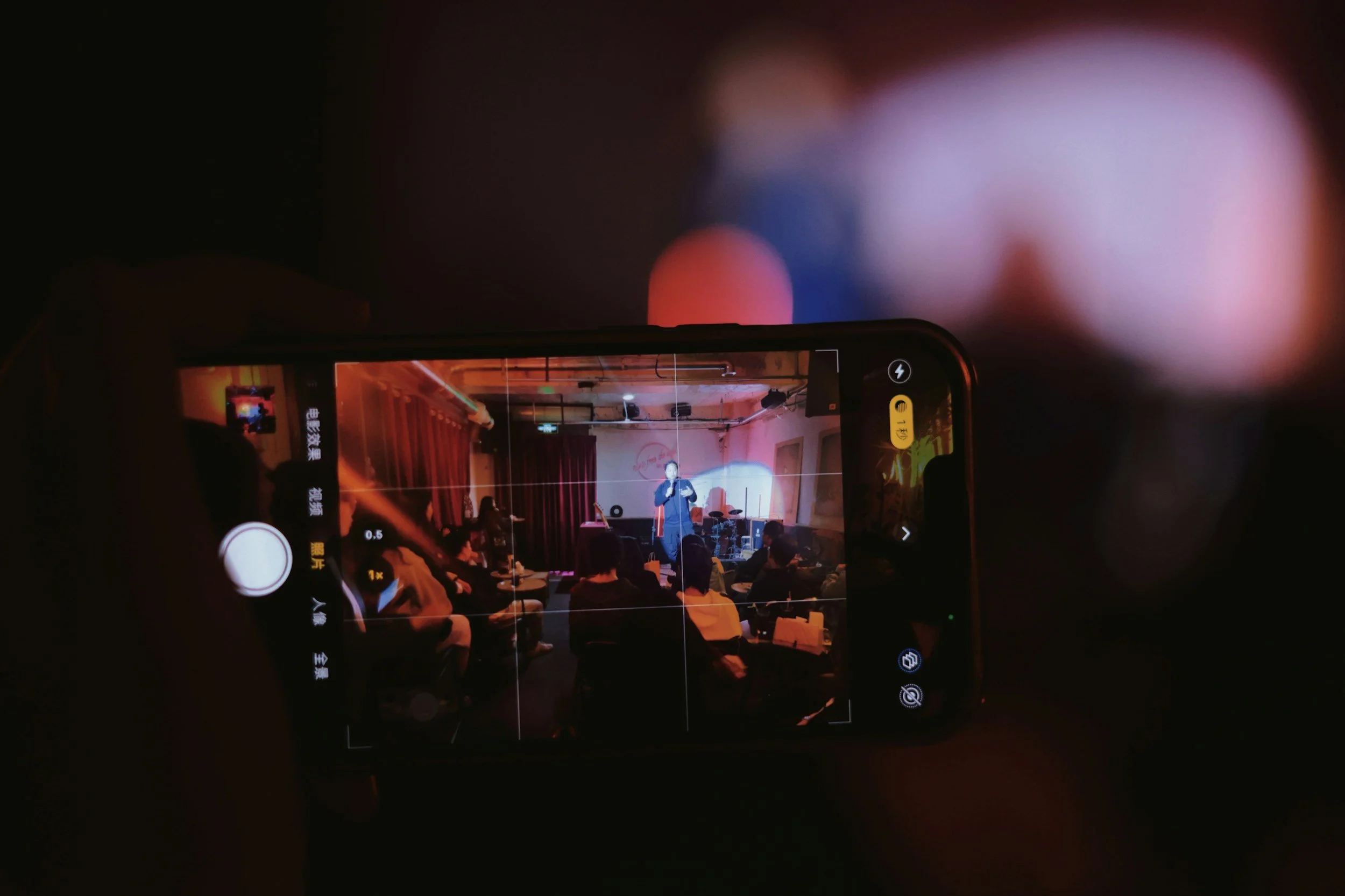
Suddenly, you didn’t need a network deal or a one-hour special. You needed a phone, a point of view, and timing. Platforms like YouTube, Instagram, and later TikTok allowed comedians to post directly to their audiences.
And something unexpected happened. People started watching more stand-up, just differently. Comedy became constant. A clip while brushing teeth. A joke between meetings. A laugh before sleep. Stand-up slipped into daily life instead of sitting on a pedestal.
The art form stopped being an event and started becoming a habit.
From Comedians to Creators:
Today’s stand-up comedian isn’t just a performer. They’re a creator.
They film their own sets. Edit their own clips. Test jokes online before taking them on tour. Read comments. Respond. Adapt. Evolve.
Social media turned stand-up into a two-way street. Audiences weren’t just consumers anymore. They became participants. A joke that lands gets shared. One that doesn’t disappear into the feed.
And unlike television, social media doesn’t care where you’re from, how you look, or whether you fit a traditional mold.
That’s why this era has seen an explosion of diverse voices — women, queer comedians, and comedians of color — telling stories that once wouldn’t have survived network scrutiny. Not because they’re trying to be “representational,” but because they’re finally speaking without filters.
The New Comedy Tone: Shorter, Sharper, Realer
Scroll through stand-up clips today and you’ll notice something immediately.
The jokes start fast. No long introductions. No warming up. Just straight into the moment. But more importantly, they feel personal.
Modern stand-up is less about performing at people and more about talking with them. Mental health, identity crises, dating fatigue, and cultural confusion aren’t niche topics anymore. They’re universal experiences, and comedians lean into that shared vulnerability.
The performer isn’t above the audience. They’re sitting right next to them, laughing at the same chaos.
Why Do People Choose Stand-Up Over TV Now?
It isn’t that people have fallen out of love with television. Life has simply become louder, faster, and more exhausting. Between work, side hustles, notifications, and the constant pressure to keep up, the newer generation rarely has the emotional bandwidth for content that asks for long attention spans or heavy commitment.
Younger audiences don’t wait for programming anymore; they discover content in fragments, often in the small pauses between tasks. Stand-up fits seamlessly into this rhythm. It doesn’t demand investment, backstory, or patience. It arrives, lands, and leaves, all within moments. That immediacy makes it comforting rather than demanding.
Stand-up clips today do what sitcoms and late-night shows once did after a long day—they offer relief. A quick laugh. A sense of being understood. In a world that already feels intense, comedy that feels light, honest, and familiar becomes the preferred escape.
The Money Shift No One Talks About Enough
The economics of stand-up have changed as dramatically as its audience. Earlier, comedy paid off only after you “made it.” Today, comedians can start earning while they’re still building their voice. A viral clip can lead to brand collaborations, sold-out shows, podcast ads, or fans paying directly to support the work they enjoy.
That freedom is real, and so is the pressure that comes with it. Income is tied to visibility, which means staying online, staying relevant, and staying funny at all times. Comedy, for many, has turned into a full-time hustle. The joke doesn’t just have to land anymore; it has to perform.
But The Stage Isn’t Dead
Live comedy still matters. Comedy clubs still shape great performers. Tours still sell out.
But the hierarchy has flipped. Earlier, you did clubs to get TV. Now, you build an audience online to fill clubs. Social media is the entry point. Television is optional. Fame isn’t handed down by networks anymore. It’s built clip by clip, laugh by laugh.
So, Is This the New Age of Stand-Up?
In many ways, yes.
Stand-up today is more accessible, more diverse, and more embedded in daily life than ever before. It reflects how people think, talk, and cope in real time. It responds instantly to culture instead of waiting for approval.
The jokes still matter. The craft still matters. The stage still matters.
But the spotlight has shifted.
Stand-up didn’t lose relevance. It gained reach.
And somewhere between a late-night scroll and a shared reel, comedy quietly became the most watched genre of our time.